State CDL Manuals
State commercial driver’s license manuals and jurisdiction-specific reference materials.
Browse State ManualsA Comprehensive Model for CDL Stakeholders
Find state-specific CDL manuals and related jurisdiction resources.
Browse State ManualsFollow the CDL enforcement and reporting path from roadside activity to the driver record.
Explore the LifecycleAccess concise, role-focused learning and knowledge-check content.
Visit TrainingStart with a stakeholder role to find relevant CDL information and tools.
Browse RolesExplore resources by role, organization, resource type, or keyword.
Open Resource GuideChoose the stakeholder role that best matches your work. Each role pathway connects users to relevant resources, filtered CFR references, lifecycle context, and tools.

CDL citation, enforcement, roadside, and violation-reference resources.
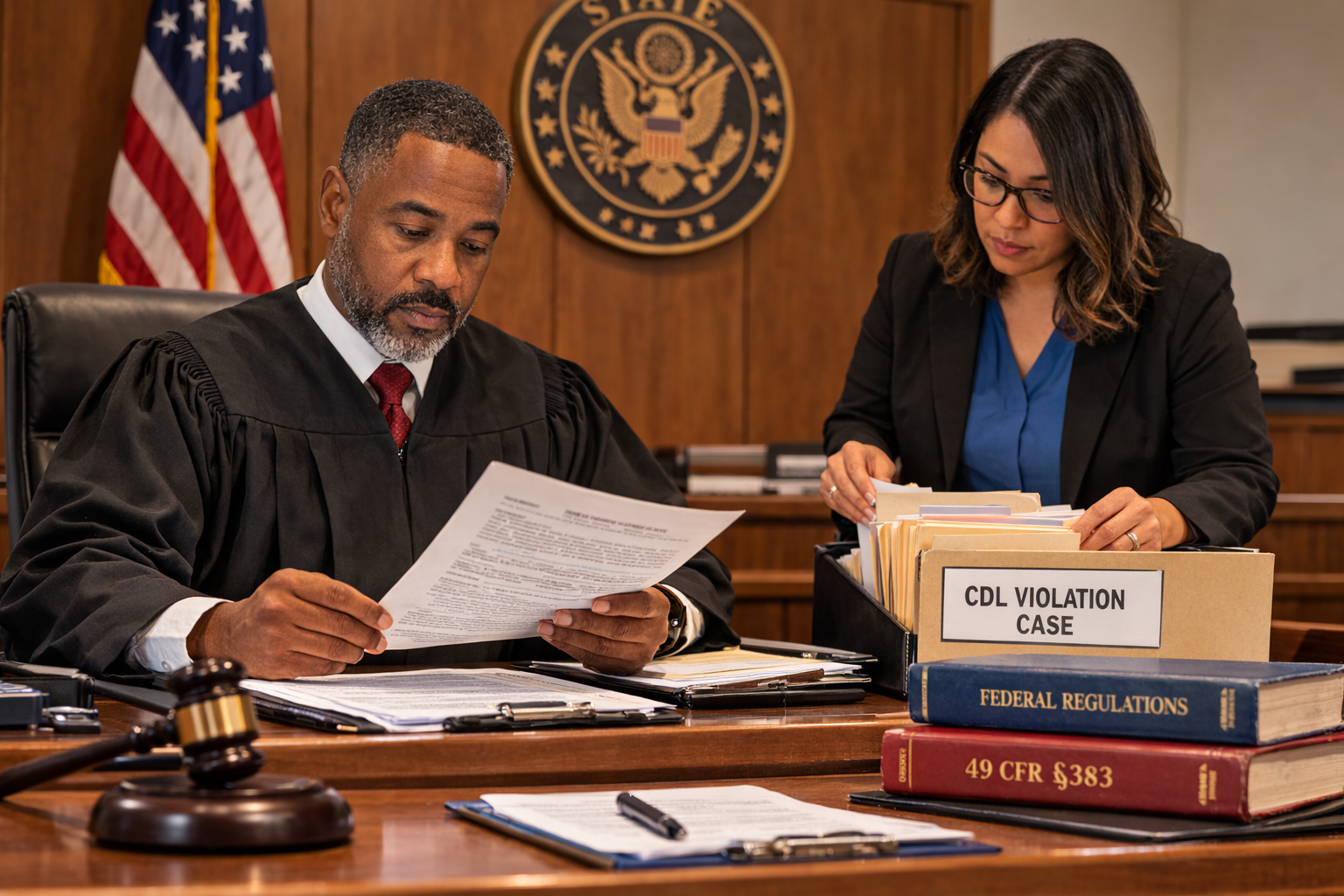
Disposition reporting, adjudication, and court process resources.

Charge review, CDL consequences, masking, and prosecution-related resources.

Licensing, compliance, CDLIS, record accuracy, and state program resources.
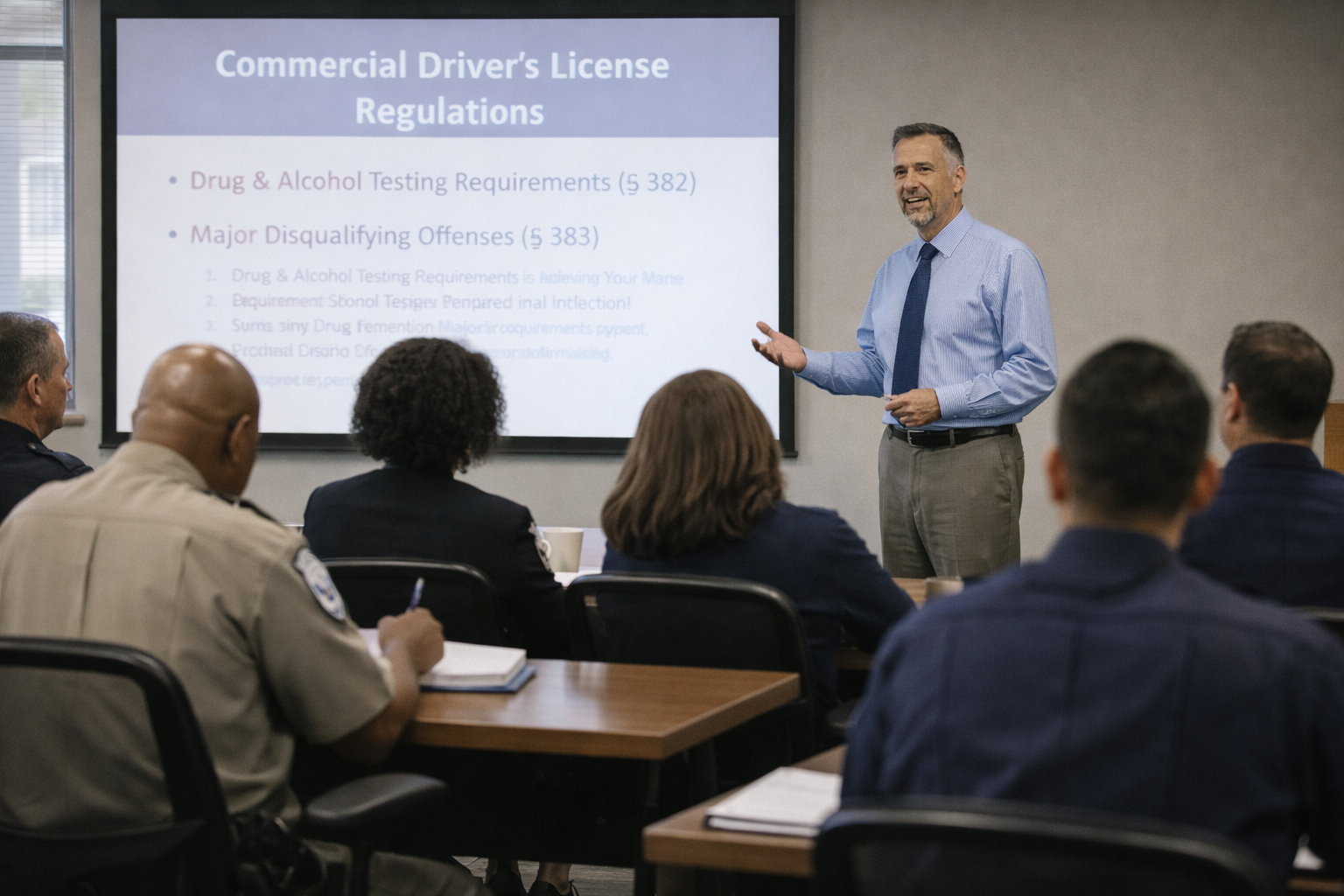
Instructional resources for CDL reporting, enforcement, and program education.

CDL standards, training, endorsements, testing, and driver responsibility resources.
State commercial driver’s license manuals and jurisdiction-specific reference materials.
Browse State ManualsFederal CDL regulations and related regulatory reference information.
View RegulationsCommon questions about CDL licensing, reporting, violations, disqualifications, and stakeholder responsibilities.
Browse FAQsCommon CDL terminology, acronyms, and stakeholder vocabulary.
Open GlossaryExplore how a CDL event moves from roadside enforcement through citation, adjudication, conviction, reporting, CDLIS, and driver history.
Explore the LifecycleConnect key CDL requirements and regulatory topics to relevant federal references.
Open Cross-ReferenceFind relevant CDL information by stakeholder role, organization, resource type, or keyword.
Open Resource GuideThe Traffic Citation Lifecycle Process Flow diagram illustrates when each stakeholder group is involved. The lifecycle begins when a law enforcement officer issues the traffic citation and continues through the adjudicatory process. The cycle is complete when the SDLA receives a conviction notice, updates the CDL holder's driving record, and imposes any sanction. The cycle begins again with a law enforcement officer verifying CDL status when conducting a roadside enforcement action.


